Published on 2026-02-19
A practical, risk-based approach to bot prevention for product owners and developers—clear outcomes, clean data, and fast UX.
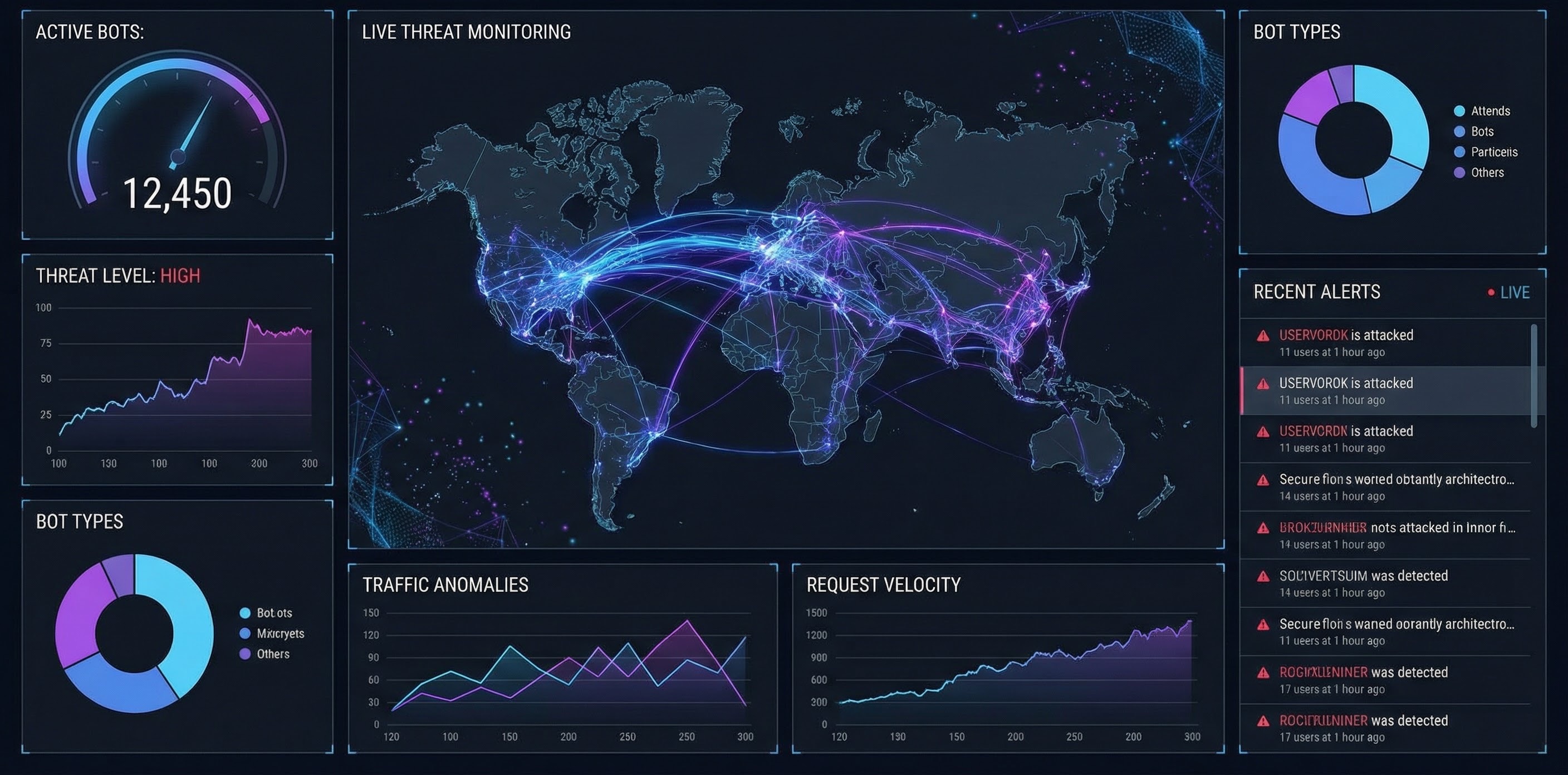
If you’re searching for something better than Google reCAPTCHA, you’re probably not looking for a new widget. You’re looking for fewer bot-driven sign-ups, fewer credential-stuffing attempts, cleaner analytics, and a verification step you can ship without turning your funnel into a science project.
For product owners and developers, the goal is the same: stop automated abuse while keeping flows fast for humans.
Primary keywords: better than Google reCAPTCHA, Google reCAPTCHA alternative
Secondary keywords: bot prevention, risk-based verification, human verification, reCAPTCHA replacement
Google reCAPTCHA (especially reCAPTCHA v3) popularised a simple idea: return a risk signal and let your backend decide what happens next. In reCAPTCHA Enterprise, that’s formalised as an assessment flow where the client collects signals, the server requests an assessment, and you receive a verdict you can act on (reCAPTCHA overview).
That design is useful—but it also means you still need to:
So “better than Google reCAPTCHA” usually means more operable control and clearer measurement, not just different front-end behaviour.
A strong Google reCAPTCHA alternative should behave like a security system you can run week-to-week.
You want:
OWASP’s work on automated threats is a good reminder of what you’re actually defending: fake accounts, credential stuffing, scraping, scalping, and other “abuse of functionality” patterns (OWASP Automated Threats).
The best pattern we see across mature teams is not “CAPTCHA everywhere”. It’s a consistent server-side contract:
This is how you turn “human verification” into something predictable for engineers and measurable for product.
Imagine your free-trial signup is getting hammered.
A practical rollout for a reCAPTCHA replacement looks like this:
POST /signup.If you can’t explain those graphs in a roadmap review, the tool isn’t “better”—it’s just different.
There are three realistic categories teams choose from, depending on how much control they need.
Best when you’re protecting multiple endpoints and want consistent behaviour everywhere.
You typically integrate once in your backend, then tune per route: signup policies differ from login policies, and both differ from checkout.
If your problem is mostly a handful of web forms, widget-based tools can be a fast swap.
Cloudflare positions Turnstile as a drop-in alternative with a simple embed + server-side verification flow (Turnstile docs).
Not a CAPTCHA replacement for every form, but excellent when the real question is “is this the account owner?”. WebAuthn is the W3C standard behind passkeys (WebAuthn specification).
A common pattern: use bot prevention for broad coverage, and require passkey step-up for risky account changes.
Use these with any Google reCAPTCHA alternative:
Humans Only is built for teams who want something genuinely better than Google reCAPTCHA: strong bot prevention with a pleasant, fast experience for real users.
It’s designed to be drop-in, typically verifies in under 2 seconds, is privacy-first (zero tracking), and comes with real-time analytics so you can see what changed after launch.
If you’re evaluating a reCAPTCHA replacement, optimise for a system you can operate: risk-based verification, clear allow/step-up/block outcomes, and metrics you can trust.
“Better than reCAPTCHA” isn’t a different challenge—it’s a better, more measurable decision.
Pick a Google reCAPTCHA alternative that supports risk-based policies per endpoint, gives you clear outcomes, and lets you protect conversion while you Stop Bots, Welcome Humans.
We use cookies to improve your experience and anonymously analyze usage.